
Employee communication has changed faster in the last few years than in the decade before it. In 2026, HR teams must reach people who work in different places, use different devices, and have different expectations. A single channel is not enough. Employees want clear, simple, and fast communication. HR needs tools that make this possible. That is why multichannel communication has become a core part of every modern HR messaging strategy.
As HR tech buyers and enterprise HR teams look to the future, understanding the best practices behind multichannel communication helps build stronger workplaces. The right mix of channels, combined with automation, data, and personalization, can support employees and reduce the burden on HR.
Why Multichannel Communication Matters More than Ever in 2026
Multichannel communication matters because employees are spread out and distracted. They work in offices, at home, and on job sites. They check messages on phones more often than laptops. They expect fast updates that fit into their day.
Using one channel, like email, is no longer effective. Some employees never check email. Others get too many messages and ignore most of them. With a mix of channels, HR can reach everyone. You can mass text your employees, send emails with more detail, and give them videos or digital content when needed.
Multichannel communication also builds trust. When employees see the same message across channels, they feel informed and connected. It also reduces missed messages and improves follow-through.
The Rise of the Hybrid and Distributed Workforce
The shift to hybrid and distributed workforces is one of the biggest reasons HR has embraced multichannel communication. Employees work in different ways. Some spend only two days in the office. Others work fully remote. Many are frontline employees who do not sit at a desk at all.
This means HR must reach people who do not always open email or use a computer during the day. Text messaging, app notifications, and mobile-friendly content help fill these gaps.
A good hybrid workforce communication plan uses the channels employees prefer. When HR meets employees where they are, communication becomes easier and more effective.
Understanding Modern Multichannel Employee Communication
Modern multichannel communication uses many channels to deliver the same message in different ways. Employees get the information they need in the format they prefer. This improves clarity and reduces confusion. To do this well, HR must understand what “multichannel” means in today’s workplace.
What “Multichannel” Means in Today’s HR Landscape
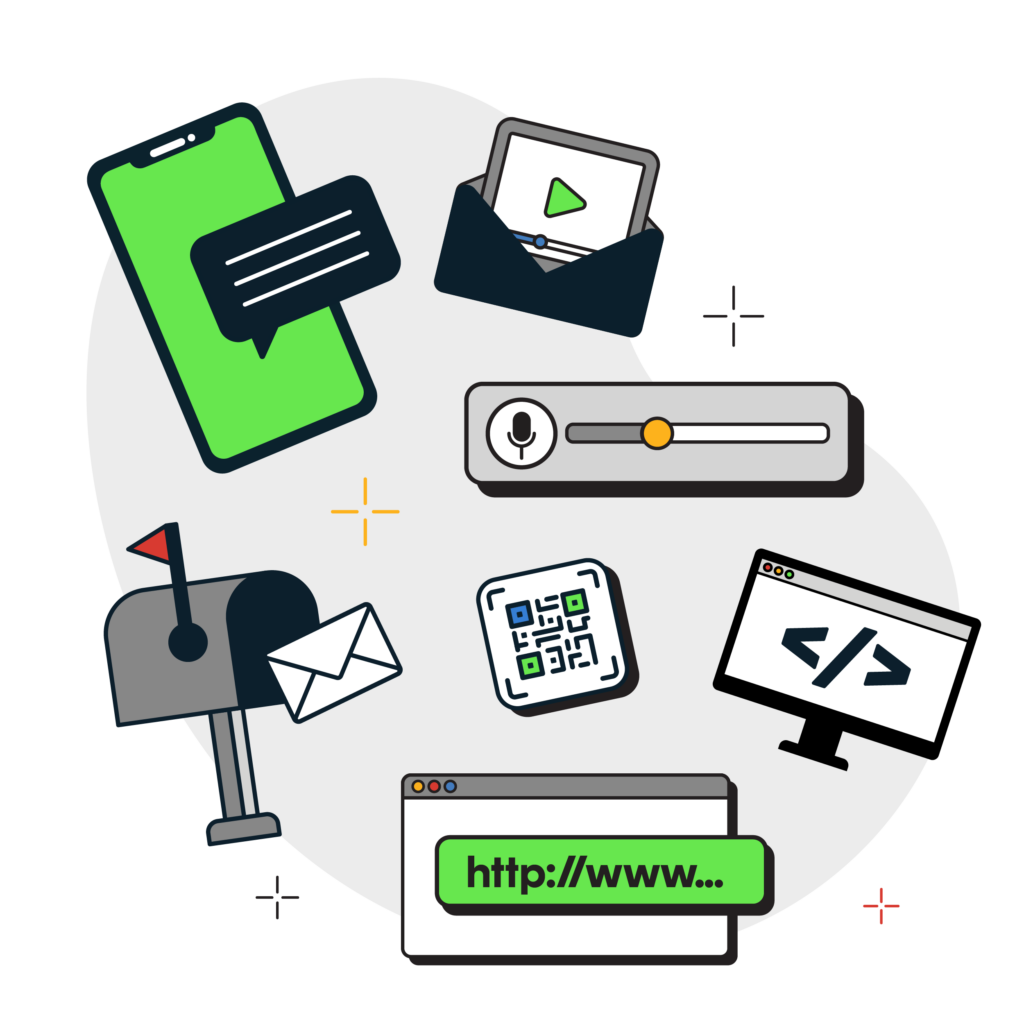
“Multichannel” means using several channels together rather than depending on just one. The key is coordination. Messages across channels support one another. Each channel does its part. SMS nudges employees. Email provides details. Digital video explains complex ideas. Microsites store everything in one place.
A multichannel plan does not overwhelm employees. Instead, it simplifies communication and makes it easier to act.
The Increasing Importance of Mobile-First Messaging
Mobile-first messaging is a priority because employees use phones more than any other device. Messages must be quick, simple, and easy to read on small screens.
SMS is especially powerful for a mobile workforce. A quick reminder about benefits or safety updates can get immediate attention. A link can send employees to a microsite, video, or form. Mobile-first communication also supports accessibility. It gives every employee the same chance to stay informed.
Choosing the Right Mix of Channels for Different Employee Needs
Different employees use different channels. HR should adjust messaging based on their needs.
For desk employees, email and intranet content work well. They can read longer messages and view detailed resources. For hybrid employees, a mix of SMS, email, and apps works best. They need quick updates and flexible access to content.
For frontline workers, SMS and short video updates are especially useful. They may not have company email, but they do have phones. By mapping employee groups to the right channels, HR delivers communication that feels natural, not forced.
Core Principles Behind Effective Multichannel Messaging
A great multichannel plan uses structure and strategy. The principles below guide HR teams to build communication that employees read, trust, and act on.
Relevance: Delivering the Right Message to the Right People
Relevance means giving employees information that fits their roles and needs. HR should avoid mass messages that do not apply to everyone.
Segmenting employees by location, job type, or department helps tailor content. When communication is relevant, employees engage more and understand faster. This improves clarity and builds trust.
Consistency: Ensuring Aligned Messaging Across Channels
Consistency ensures that employees get the same message no matter where they see it. A text reminder should match the email. A video should support the written content. A microsite should reinforce everything.
When the message is consistent, employees feel confident. They know the information is accurate and up to date. Consistency also strengthens HR communications tools and reduces confusion.
Accessibility: Supporting Deskless, Hybrid, and Global Workforces
Accessibility is essential. Every employee should be able to receive information, no matter their location or device.
Messages should be written clearly. Tools should be mobile responsive. Content should be available in formats that suit different work environments. This helps HR build a communication system that supports everyone.
Key Trends Influencing HR Communication in 2026
In 2026, HR communication will be seeing big changes driven by technology and workforce expectations. These trends shape how HR teams plan and deliver multichannel messaging.
Growing Adoption of SMS Automation for HR
SMS automation has become a major trend because it supports fast and simple communication. Automated SMS makes it easy to mass text your employees without manual work.
It is useful for reminders, alerts, compliance updates, onboarding steps, and benefits deadlines. It also works well for frontline workers who depend on mobile access.
SMS automation allows HR to reach employees quickly, and employees appreciate the simplicity.
AI-Powered Personalization and Content Generation
AI helps HR teams personalize messages at scale. It can adjust language, timing, and content based on employee needs.
AI tools can also help generate content for emails, microsites, and video scripts. They can respond to questions and guide employees through choices. This increases efficiency and improves employee satisfaction.
Increased Focus on Measurement and Engagement Analytics
Data is now essential for internal communication. HR teams want to know what works and what does not.
Analytics track open rates, click rates, video views, SMS responses, and survey completion. This helps HR see which channels perform best. With this insight, HR can improve their HR messaging strategy and create communication that drives results.
Enhancing Employee Engagement Through Digital Communication Tools
Modern digital tools help HR move beyond simple messaging. They create experiences that support engagement and understanding.
Role of Employee Engagement Platforms in 2026
Employee engagement platforms help HR deliver structured, multichannel campaigns. They combine SMS, email, video, surveys, and digital guides in one place.
They also offer automation and analytics. HR can build consistent and simplified campaigns that improve participation and reduce confusion. These platforms help HR support employees throughout the year, not only during major events.
Using Interactive Content and Digital Video to Drive Participation
Interactive content and video are powerful communication tools. They make complex topics easier to absorb.
Employees remember more when content is visual and simple. Interactive tools help employees explore options and make informed choices. Digital videos can also deliver updates in a friendly and human way.
Encouraging Two-Way Feedback Through Surveys and Quick Polls
Two-way feedback helps employees feel heard. Quick surveys or polls let HR understand what employees need or prefer. This helps HR adjust messaging, improve content, and build trust. Feedback also strengthens the overall HR messaging strategy.
Why Multichannel Communication Is No Longer Optional
Multichannel communication is essential in 2026. HR teams must reach employees in simple, effective, and personalized ways. By using SMS, email, video, apps, and microsites together, HR can create communication that works for everyone.
Automation, AI, analytics, and strong HR communication tools help HR teams work smarter and faster. Tools like an HR SMS tool, employee-texting platform, HR bulk email system, and HR email-notification tool make communication smoother and more reliable.
When HR follows these best practices, communication becomes clearer and more engaging. Employees stay informed, feel supported, and trust HR more. A thoughtful multichannel approach builds stronger workplaces and helps organizations prepare for the future.