
Five years ago, I thought being good at HR meant knowing everything.
If something went wrong, it was on me to fix it.
If an employee had a question, I needed to have an answer.
If there was confusion, I assumed it meant I hadn’t explained it clearly enough.
That mindset followed me everywhere. It was especially present during open enrollment. My inbox would fill up faster than I could clear it. The same questions would come in over and over again, each one urgent to the person asking. I’d answer one, then another, knowing there were bigger projects waiting, but never quite getting to them.
And then there were the moments that carried more weight.
An employee calling because they just had a baby and didn’t know if their newborn was covered. Someone trying to navigate a leave of absence while already dealing with a stressful life event. Conversations where the stakes were high and the margin for error felt nonexistent.
In those moments, being “the source of truth” wasn’t just a part of the job. It was a responsibility I couldn’t afford to get wrong.
At the time, I thought the solution was to work harder. Be more responsive, more organized, and know more.
What I didn’t realize was that the system itself was asking HR teams to do too much at once.
The Reality of HR Work
People often think the hardest part of HR work is the complexity. It’s actually the volume.
It’s answering the same question for the tenth time before lunch, and knowing you’ll answer it ten more times before the day is over. It’s switching between systems, documents, and emails just to track down a single answer. It’s trying to stay proactive while your day keeps getting pulled back into your inbox.
And the thing is, those questions aren’t trivial.
What’s my deductible? When do I need to enroll? They sound simple, but they come from real confusion. And for the employee asking, it’s often tied to something bigger. A doctor’s visit. A life event. A decision they don’t feel confident making.
So you answer. Every time.
But over time, something starts to shift.
Instead of improving communication, you’re responding to gaps. Instead of planning ahead, you’re catching up. The work becomes less about building better experiences and more about managing the fallout of confusion.
It’s like trying to empty the ocean with a bucket. You keep moving, responding, solving, but the water never really goes down.
And that’s where so many HR teams get stuck. Not because they don’t care or aren’t capable, but because the work keeps them in a cycle that’s hard to break.
The Misunderstanding About AI in HR
When people talk about AI in HR, the conversation often goes in one direction: replacement.
Will it take over tasks?
Will it reduce headcount?
Will it make certain roles unnecessary?
I understand why that’s the instinct. Many vendors position AI tools that way, advertising them as faster, cheaper, and more automated. But that framing misses the reality of what HR work actually is.
HR isn’t just a set of tasks. It’s a series of conversations. It’s context, nuance, and timing. It’s knowing when someone needs reassurance more than answers.
No system is replacing that.
What AI can do is remove the friction that keeps HR teams from doing that work well.
Because the truth is, most of the time, HR isn’t overwhelmed by complex, high-stakes decisions. It’s overwhelmed by repetition.
And when that layer of repetition takes over the day, everything else gets pushed aside. The strategic work. The proactive communication. The moments that actually require a human touch. That’s where the right kind of AI changes things. It’s not replacing HR, but instead taking the “Groundhog Day” part of the job off their plates.
When the Repetitive Work Disappears
At some point, I started asking a different question.
It shifted from “How do I answer these questions faster?” to “What if I didn’t have to answer all of them myself?”
What if employees could get clear, accurate answers the moment they needed them? All without waiting on HR, digging through folders, or second-guessing whether they were looking at the right information?
What if the most repetitive part of the job…wasn’t there anymore?
That’s the shift.
Because when you remove the constant cycle of repetitive Q&A, the entire rhythm of the work changes.
You can think ahead. You can focus on improving how that information is communicated in the first place. You can step into the interactions that actually need you.
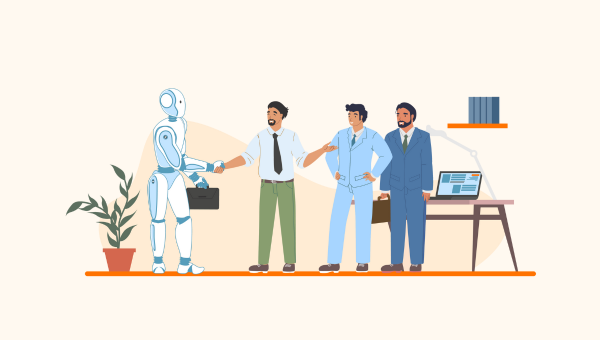
That’s where a benefits-focused AI assistant comes in, not as a replacement, but as a layer of support.
It becomes the first place employees go for answers. A place where they can ask questions in plain language and get responses grounded in their actual benefits. They can follow up without feeling like they’re taking up someone’s time.
In a way, it acts like a 24/7 extension of the HR team. One that handles high-volume questions, so HR has time to breathe again. And once that space opens up, the impact is bigger than just saving time.
What This Actually Changes
When you take the repetitive layer out of HR work, the impact shows up quickly, and not just for HR teams.
Employees Get Answers Without Friction
For employees, the biggest shift is access.
Instead of searching through documents, second-guessing what they’re reading, or waiting for a response, they can ask a question and get an immediate answer. No delays. No uncertainty about where to look.
Employees don’t have to worry about asking something basic or feeling like they should already know the answer. They can ask follow-up questions, clarify what’s confusing, and move on with confidence. That alone changes how people interact with benefits.
When information is easier to access and understand, employees are far more likely to use it.
HR Gets Time Back (and Fewer Interruptions)
On the HR side, the shift is just as noticeable.
The constant interruptions start to fade. The same questions don’t keep resurfacing throughout the day. The inbox becomes more manageable. It’s not empty, but it’s no longer driving every minute of the workday.
And it goes beyond time. There’s a chance to focus.
When you’re not answering repetitive questions, you can step back and improve the experience as a whole. You can identify where communication is breaking down. You can plan ahead instead of catching up.
You move from being busy to being effective.
Communication Becomes Clearer and More Consistent
There’s another shift that’s easy to overlook but incredibly important: consistency.
When answers are coming from a single, centralized source, grounded in actual plan documents and employer-approved materials, employees aren’t getting slightly different versions of the same answer depending on who they ask.
They’re getting the same clear, accurate response every time.
That reduces confusion. It reduces follow-up questions. And it builds trust because employees know the information they’re receiving is reliable.
It also creates a feedback loop.
By seeing what employees are asking and where confusion still exists, HR teams can refine their communication strategy over time. Whether that’s improving a benefits guide, updating a microsite, or reinforcing key messages through short explainer videos, the insights are there.
When all of that comes together, something important happens.
The work doesn’t just get easier. It gets better.
The Better AI Way: What I Wish I Knew
If I could go back five years, I wouldn’t tell myself to work harder or move faster.
I’d say this instead:
You don’t have to do it all alone. And not everything has to be done the hard way to be valuable.
For a long time, I believed that being effective in HR meant being everywhere at once. Answering every question. Catching every issue. Carrying the full weight of being the “source of truth.”
And while that mindset comes from a good place, it’s not sustainable. More importantly, it’s not what makes HR impactful.
What actually makes a difference is clarity, consistency, and creating systems that put people first. That’s where the right kind of AI fits in.
Not as a replacement for HR, but as a support system that removes the noise. The focus shifts to the work that requires context, empathy, and human judgment. When that layer is handled, everything shifts.
You have time to think more strategically. Benefits communication improves, and employees are supported through moments that matter.
Employees feel the difference too. They get faster answers with information they feel confident using to make important decisions.
That’s the better way forward. Using the right tools, whether it’s an AI assistant, a well-structured benefits hub, or clear, accessible communication, reduces friction for everyone. Because at its core, HR has always been human work. The goal isn’t to change that. It’s to protect it.