
Effective employee benefits communication has never been more important, or more challenging. For organizations with large field-based and multilingual workforces, ensuring employees understand and utilize their benefits can feel nearly impossible.
That was the reality facing LandCare, one of the nation’s leading commercial landscaping providers. With approximately 3,000 employees working across the country in both field and office roles, the company needed a better way to connect employees with critical benefits information.
By partnering with Flimp to launch a centralized Benefits Hub and AI-powered chatbot, LandCare transformed how employees access and engage with their benefits, resulting in a 40% increase in open enrollment engagement, the highest in company history.
Related: Download the full LandCare Case Study. Download it here →
The Challenge: Reaching a Distributed, Deskless Workforce
LandCare’s workforce spends most of its time working outdoors, not behind desks. Many employees do not have regular access to computers, and a significant portion of the workforce speaks Spanish as their primary language.
Before implementing a centralized benefits communication strategy, benefits information was spread across multiple locations and resources. Employees often struggled to find answers to basic questions, creating frustration and reducing engagement with available benefits programs.
This fragmented experience created several challenges:
- Benefits information lacked a single source of truth
- Employees had difficulty finding answers independently
- Benefits utilization remained lower than expected
- HR and benefits teams spent excessive time answering repetitive questions
- Language barriers limited accessibility for Spanish-speaking employees
- Traditional communication methods struggled to reach field workers effectively
LandCare recognized the need for a more accessible, consistent and employee-friendly benefits experience.
The Solution: A Centralized Benefits Hub Designed for Every Employee
To improve access and engagement, LandCare partnered with Flimp to create a centralized, mobile-friendly Benefits Hub.
The hub served as a one-stop destination where employees could easily access:
- Benefits plan information
- Enrollment resources
- Educational materials
- Benefits guides
- Support resources
- Important updates and announcements
Because Flimp’s microsite technology is mobile responsive and available on any device, employees could access benefits information wherever they were, whether in the field, at home or in the office. This approach aligns with Flimp’s mission of helping employers engage, educate and empower employees through accessible digital communications.
Bilingual Access for an Inclusive Benefits Experience
Recognizing the diversity of its workforce, LandCare made all Benefits Hub content available in both English and Spanish.
This multilingual approach ensured employees could access information in their preferred language, helping improve understanding, confidence and participation during open enrollment and throughout the year.
AI-Powered Benefits Support with “Beni”
To further improve the employee experience, LandCare launched an AI-powered chatbot called Beni.
The chatbot provided instant answers to employee questions by pulling information directly from plan documents and benefits resources.
Instead of waiting for assistance from HR, employees could quickly find answers on their own, improving both convenience and efficiency.
Driving Adoption Through a Multichannel Communication Strategy
Even the best benefits platform requires a strong communication strategy to drive awareness and participation.
To ensure employees knew about the new Benefits Hub, LandCare implemented a comprehensive multichannel campaign that included:
- Print mailers sent to employees’ homes
- QR codes for easy mobile access
- Text messaging campaigns
- Email communications
- On-site posters during open enrollment
This omnichannel approach helped meet employees where they already were, increasing visibility and making access simple.
A Smart Engagement Tactic: Gamification
LandCare also incorporated a scavenger hunt and raffle within the Benefits Hub.
This simple gamification strategy encouraged employees to explore available resources and learn more about their benefits offerings.
By making the experience interactive and rewarding, LandCare increased participation and helped employees discover programs they may have otherwise overlooked.
The Results: Record-Breaking Benefits Engagement
The impact was immediate.
Benefits Hub Performance Metrics (As of early 2026)
English Benefits Hub
- 3,190 views
- 3,257 clicks
- 4,086 touches
Spanish Benefits Hub
- 357 views
- 563 clicks
- 778 touches
AI Chatbot Performance
- 116 unique visitors
- 110 total questions asked
- Only 1 question required human support
Most importantly, LandCare achieved a 40% increase in open enrollment engagement, marking the highest engagement level in company history.
Improved Employee Awareness and Benefits Utilization
As employees began using the Benefits Hub and chatbot, they uncovered valuable benefits and programs they had not previously known existed.
The centralized experience helped employees:
- Explore benefits more easily
- Better understand available offerings
- Access no-cost programs and resources
- Make more informed decisions during enrollment
According to Amber Burkett, Benefits Manager at LandCare:
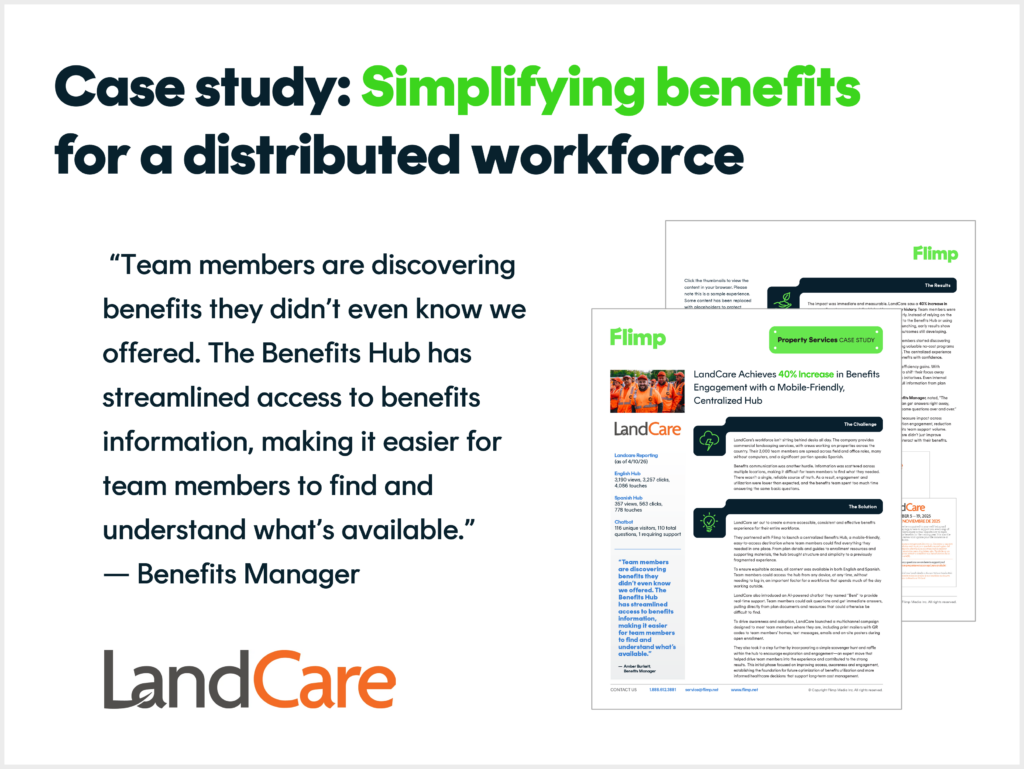
“Team members are discovering benefits they didn’t even know we offered. The Benefits Hub has streamlined access to benefits information, making it easier for team members to find and understand what’s available.”
Reduced Administrative Burden for HR
The benefits team experienced significant operational improvements as well.
With employees finding answers independently through the Benefits Hub and chatbot, repetitive support requests decreased substantially.
As a result, HR professionals were able to spend less time answering routine questions and more time focusing on strategic initiatives that deliver greater value to the organization.
Burkett noted:
“The chatbot has been incredibly helpful. Team members can get answers right away, and our team is spending less time responding to the same questions over and over.”
Even internal benefits team members began using the chatbot to quickly locate information within plan documents, improving both speed and accuracy.
Why This Benefits Communication Strategy Worked
LandCare’s success highlights several best practices for modern benefits communication:
1. Create a Single Source of Truth
Centralizing benefits information reduces confusion and makes it easier for employees to find what they need.
2. Design for Mobile First
For deskless and remote workforces, mobile-friendly communication is essential.
3. Support Multiple Languages
Multilingual communications improve accessibility, understanding and equity.
4. Provide Self-Service Resources
AI-powered tools help employees get answers instantly while reducing HR workload.
5. Use Multichannel Outreach
Combining text messages, email, QR codes and print materials increases visibility and participation.
6. Incorporate Gamification
Simple engagement tactics like contests and scavenger hunts can dramatically increase exploration and interaction.
Looking Ahead
LandCare’s Benefits Hub initiative established a strong foundation for future benefits optimization.
As adoption continues to grow, the company plans to evaluate outcomes such as:
- Preventive care utilization
- Point solution engagement
- Benefits program participation
- Reductions in avoidable claims
- Continued decreases in HR support volume
What began as a communication challenge has evolved into a long-term strategy for improving employee engagement, benefits awareness and operational efficiency.
Transforming Benefits Communication for the Modern Workforce
LandCare’s experience demonstrates what’s possible when organizations combine centralized communications, mobile accessibility, multilingual content and AI-powered support.
For employers with distributed, remote or deskless workforces, a modern Benefits Hub can do more than improve communication, it can fundamentally change how employees interact with and appreciate their benefits.
By providing employees with easy access to information, real-time support and engaging educational experiences, organizations can drive higher participation, reduce administrative burden and help employees make more informed benefits decisions.